
This year’s ILLUQ joint WP1 and WP3 field campaign together with the ThinIce project was a bit shorter compared to the last two summer expeditions: about a week of field work followed by a workshop at Aurora Research Institute (ARI) and a few days of logistic and life within the Inuvik community.

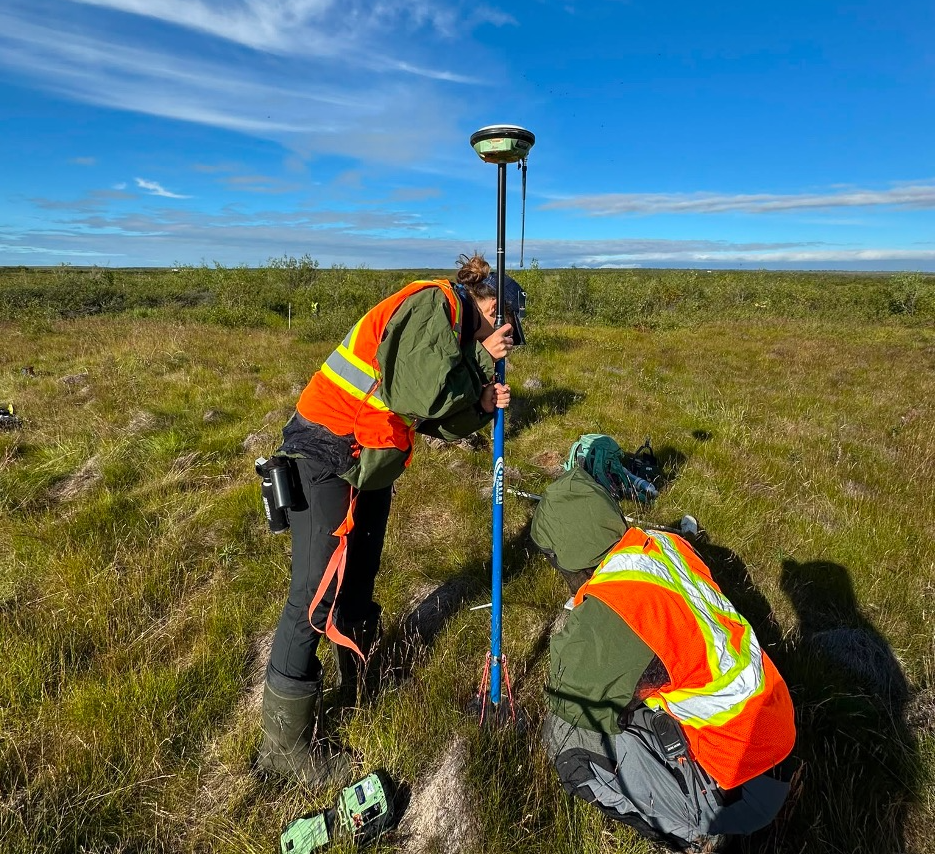
During the fieldwork we revisited the study sites and read out loggers, TOMs sensors and Ibuttons as well as measured DGPS at established points, took active layer measurements, sampled the waters in the ponds and measured electro-resistivity of the ground, all viewed from above by our trusty mini drone. All in good spirits and with great team work from researchers and wildlife and environmental monitors from the Inuvik and Tuktoyaktuk Hunters and Trappers Committee together.
The evenings in the ARI’s row houses in Inuvik provided good food and battery charging, both human and instrumental.
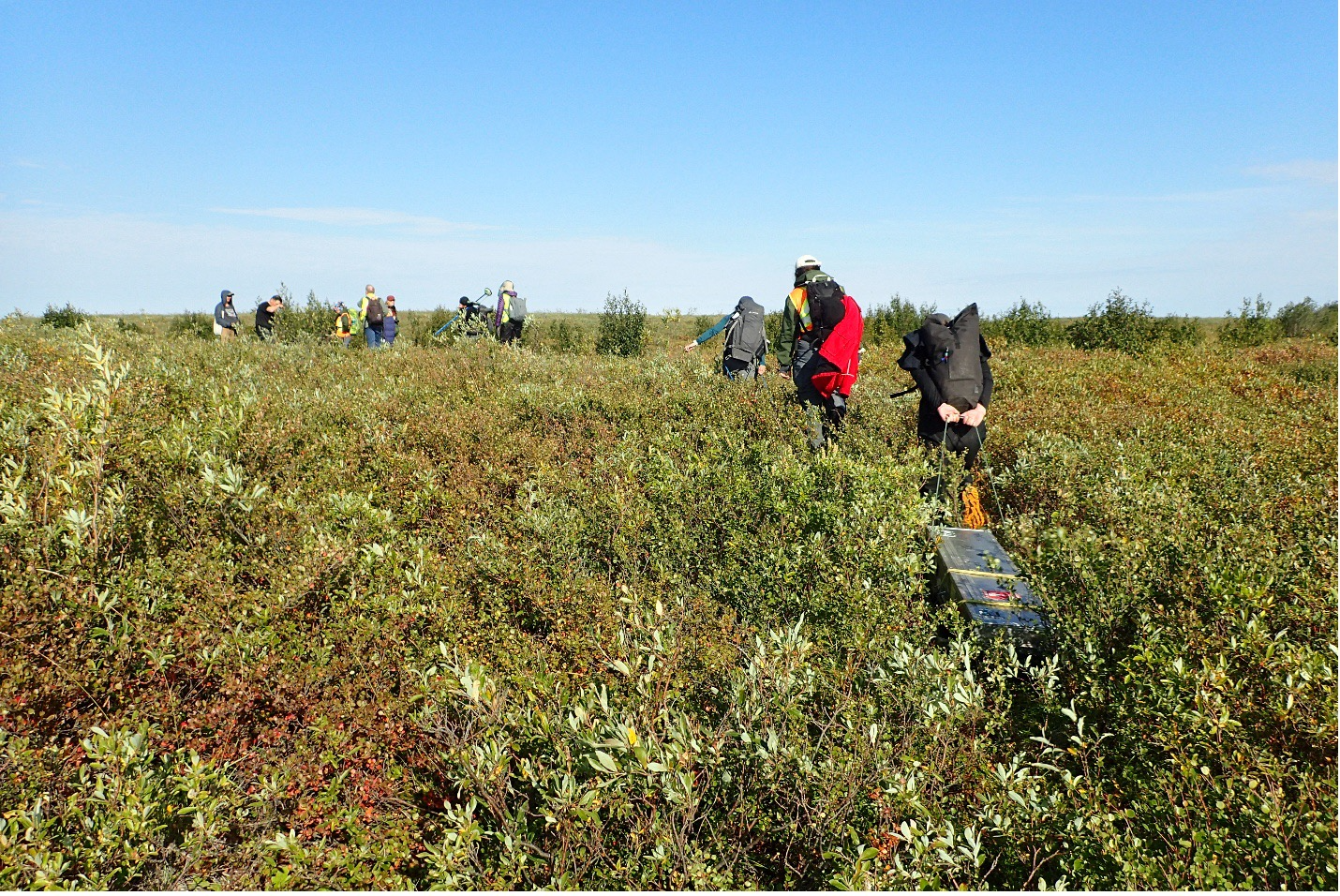
Weather and road conditions were on our side with temperatures around 17°C and an unusually smooth ride on the so-called Inuvik-Tuktoyaktuk Highway. The last few days of the field work came with some rain though.
The first day of the workshop held at the ARI in Inuvik included great presentations by researchers and local stakeholders with the latest findings from the research projects as well as current threats and challenges for the local community.
The second day brought many fruitful discussions on past, present and future of permafrost research and challenges in monitoring the Canadian Arctic permafrost environment and infrastructures, such as the drilling mud sumps we learned to know in the Northwestern Territories.

