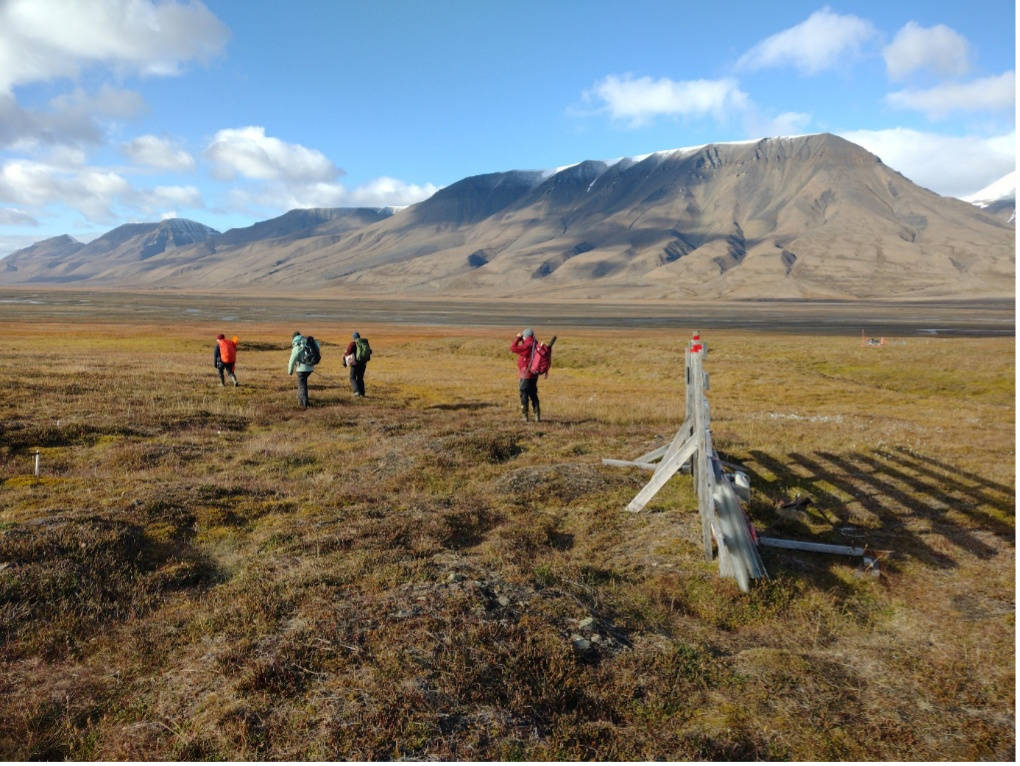
Summer 2026 saw an exciting opportunity for collaboration between Umeå University and Tromsø University to conduct fieldwork on Svalbard for WP2. The team consisted of Matthias Siewert, Julia Wagner and Amalia Hey from Umeå University, and Elisabeth Cooper and Sara Pastacaldi from Tromsø University. During August 2026 the team conducted fieldwork in Adventdalen, Svalbard with the aim of studying permafrost degradation and vegetation changes.
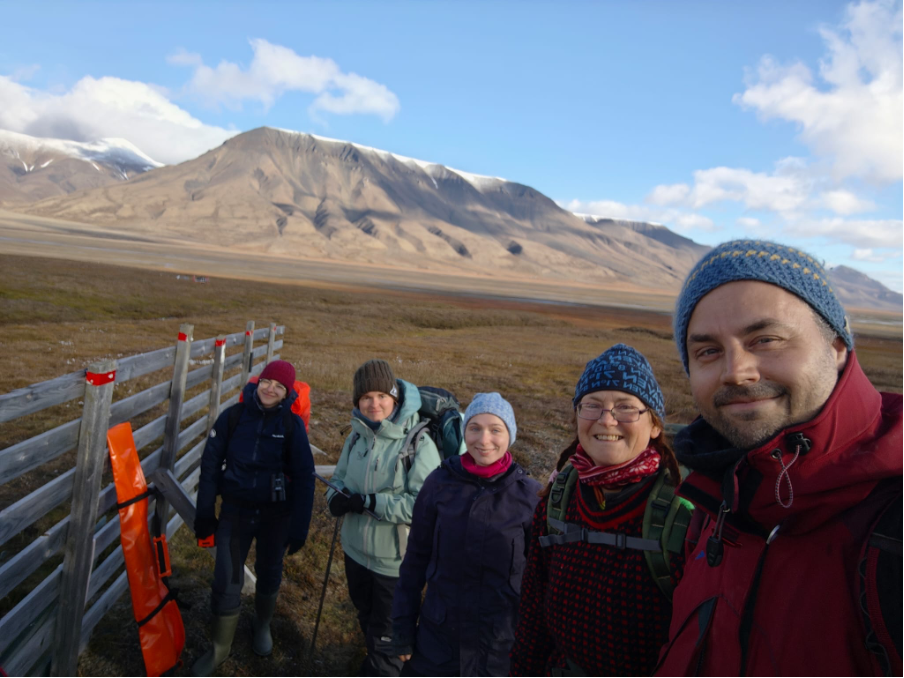
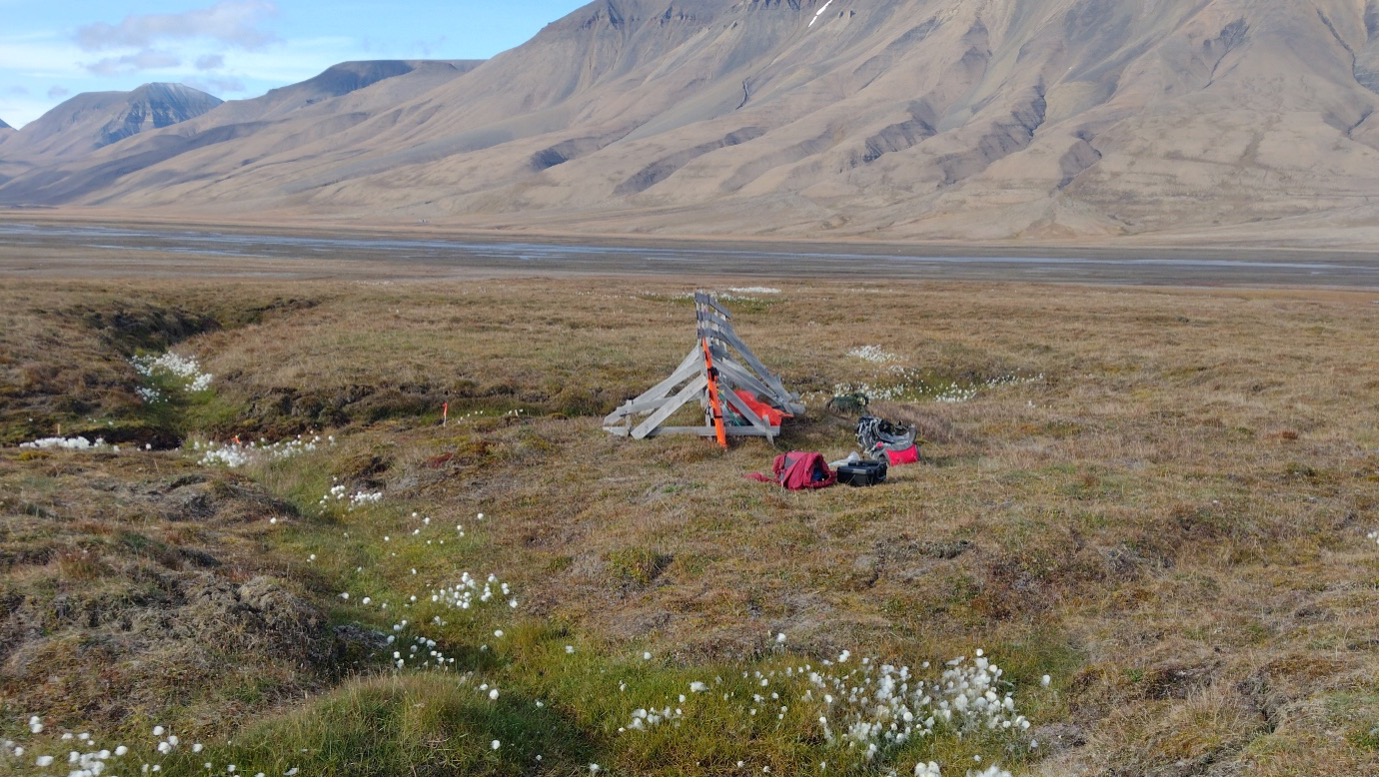
The aim of the fieldwork was to use an established snow fence experiment to investigate the vegetation changes that occur on Svalbard as a result of increased snow cover, using remote sensing and field measurements. The ongoing snow fence experiment in Adventdalen has been running for the past 20 years, since its creation by Elisabeth in 2006. The experiment includes 11 snow fences, with each fence having several permanent plots and controls. Whilst during the first years of the experiment only minor changes were observed, in recent years the experiment has caused some really dramatic changes related to permafrost degradation. This shows how vulnerable these regions are to even small changes in environmental conditions, such as increased snow cover.
First thing on the agenda after arriving on Svalbard was to complete the polar bear safety course at UNIS. After this was successfully completed, the team was ready to travel to Adventdalen to start the fieldwork.
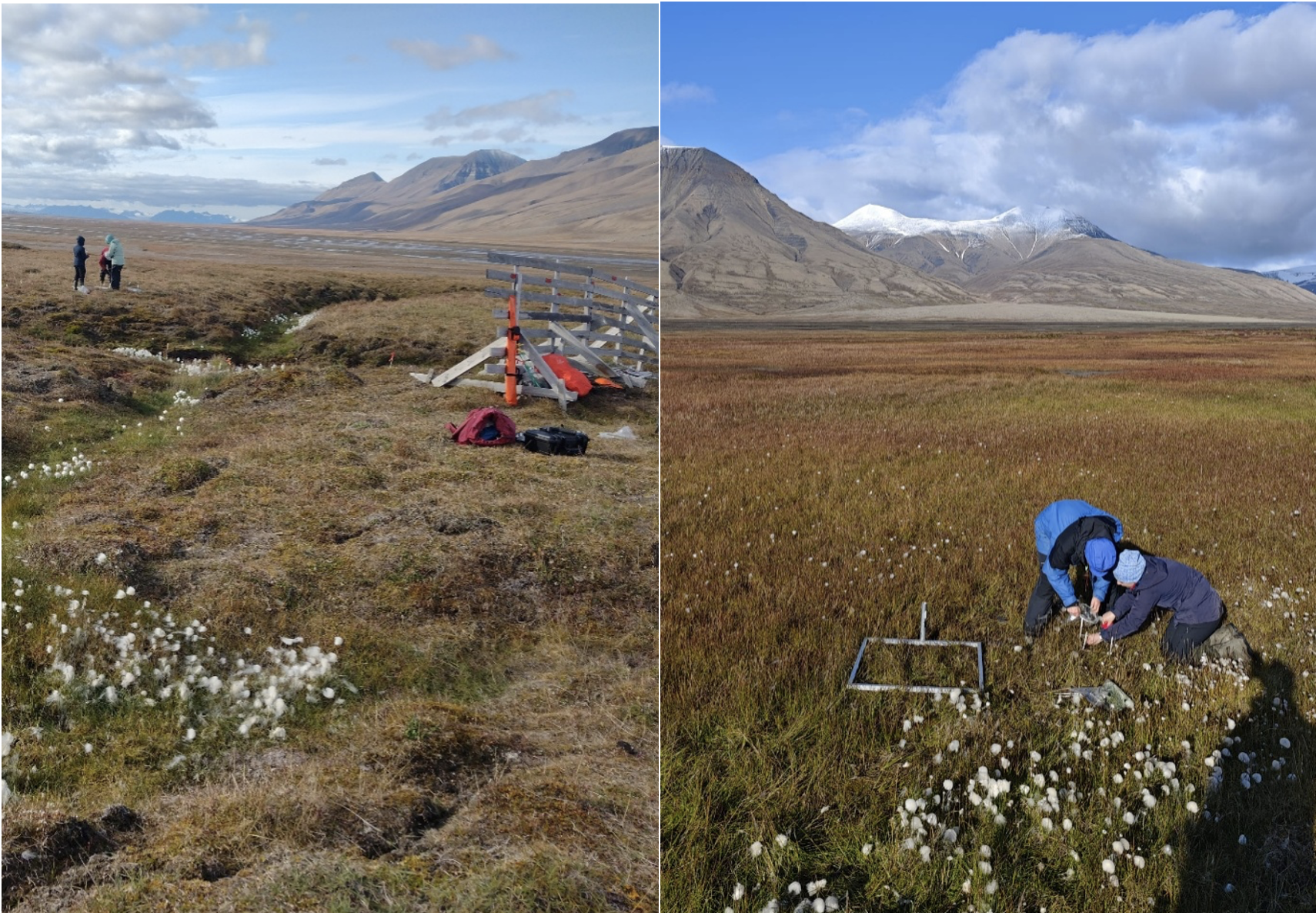
The work started with equipment testing as well as initially viewing the snow fences and their permanent plots, with great support from Elisabeth and Sara in identifying the permanent plots. Then over the course of ten days, data was collected at the 11 snow fences and in the surrounding area. This data was a combination of remote sensing data, field measurements and field samples. The resulting data collected included drone images, active layer depth information using a permafrost probe, soil moisture measurements and biomass samples.
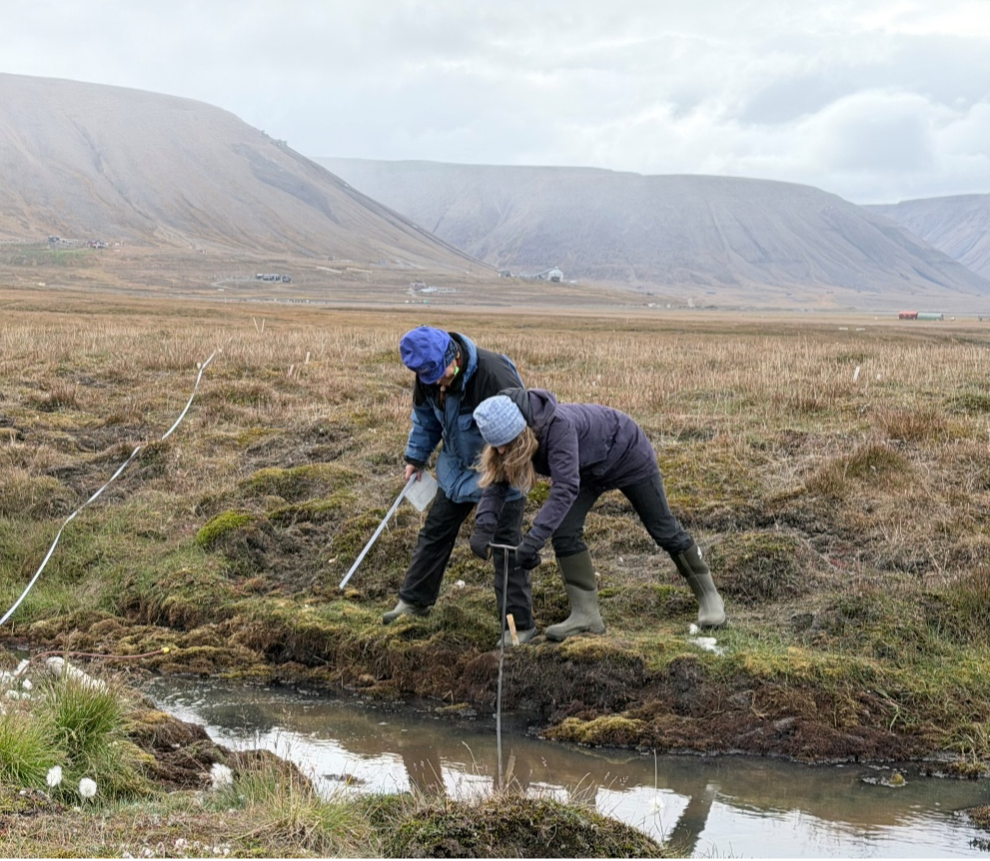
Alongside providing useful data, the expedition provided the opportunity to check on the condition of the snow fences to help ensure the experiment’s longevity. The trip also gave us opportunities to observe the local wildlife. There were reindeer grazing nearby, an abundance of geese and other birdlife flying around, and there were even a few arctic foxes roaming the area. The expedition also provided a great chance to see the 2026 solar eclipse.
All weather conditions and temperatures were experienced during the fieldwork, with some days being sunny and calm whilst other days offering wind and rain. Additionally, there was also some snow, which thankfully quickly thawed and only had a very limited impact on data collection. The team worked hard and efficiently over the 10-day period to successfully collect all the necessary data. This data was then transported back to Umeå University where it will be analysed. The data will be used to help advance our understanding of how permafrost degradation can impact vegetation in the Arctic.