
During the first week of September, the ThawingLYR project brought together local stakeholders, residents, and research colleagues from across the Nordics for a series of permafrost activities in Longyearbyen.
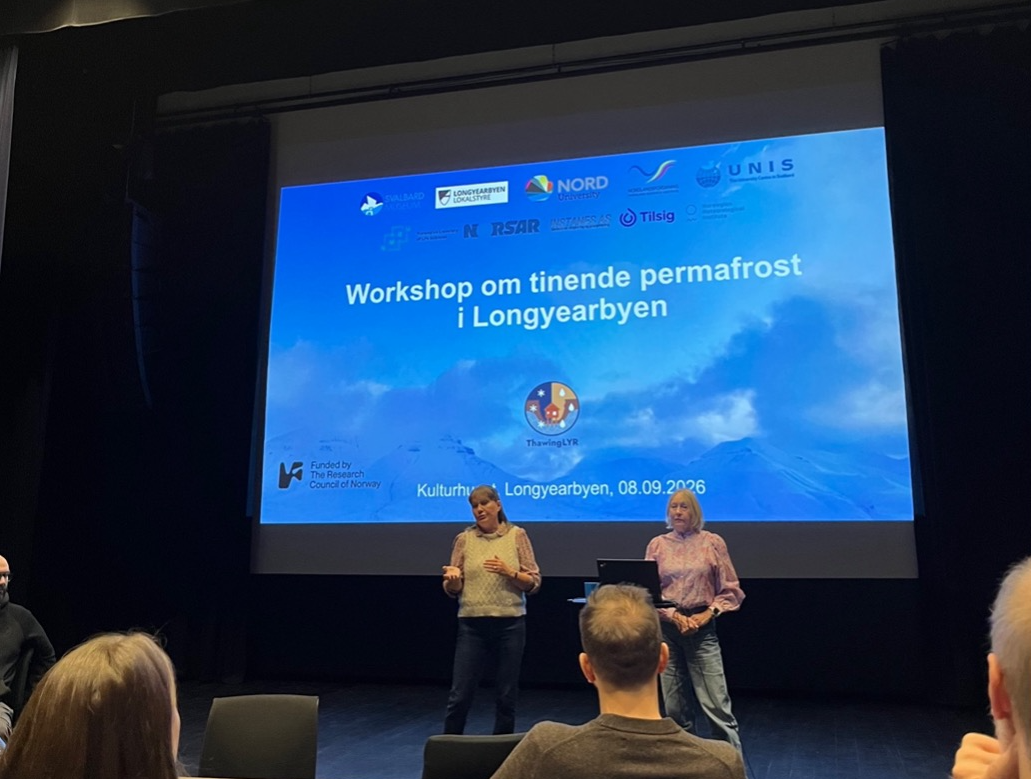
At a workshop at Kulturhuset, the newly launched permafrost portal https://portal.thawinglyr.com/ was presented to and discussed with local stakeholders, including Longyearbyen Community Council, Sysselmesteren, the Governor of Svalbard, Stattsbygg (the state-owned housing company), Avinor (the airport), Svalbardbutikken (the local convenience store), Store Norske Energi and Svalbard Museum and local engineering companies.
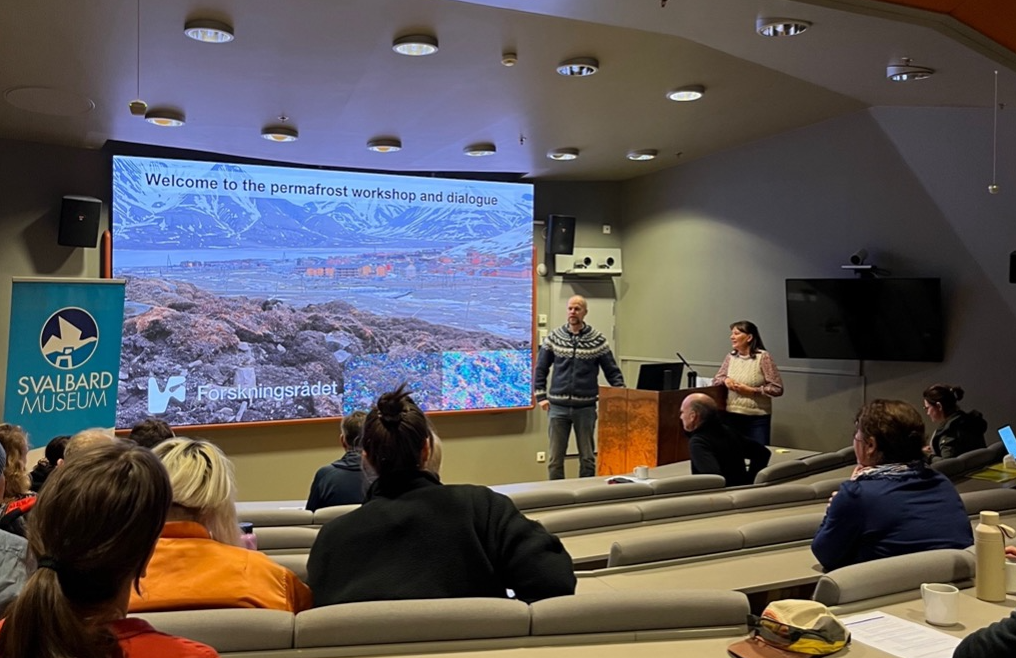
Participants were invited to explore the portal hands-on and provide feedback on its content and usability. Together, we discussed what data and information about permafrost and ongoing changes are most useful and relevant, the permafrost-related challenges people encounter in their everyday lives and work in Longyearbyen, and possibilities for as well as challenges to adaptation. As the system is developed by the ThawingLYR research project and further developing into a permafrost and climate response system, we also discussed where such a system should be hosted after the research project is over by the end of 2027.
In the evening, the wider public was invited to an open permafrost seminar at Lassegrotta to hear about ongoing research in Longyearbyen and experiences from elsewhere in the Arctic. Researchers from the Norwegian Research Council funded ThawingLYR project, the EU project ILLUQ, and NordForsk project ARCHAIC shared recent findings and ongoing work, including on an overview over climate and permafrost (Marius Jonassen & Hanne Christiansen), how permafrost in Longyearbyen is impacted by infrastructure (Arne Instanes), how permafrost thaw is—and is not—addressed in policy documents (Tiril V. Hansen). Maaike Werdesteijn introduced the ThawingLYR permafrost data portal, and Lillian Risvaag from Longyearbyen Community Council shared how she works with permafrost thaw in practice and reflected on the challenges it creates for the local community. Ulrich Neumann and Charlotte Bruland shared about ongoing citizen science activities related to permafrost in Longyearbyen.
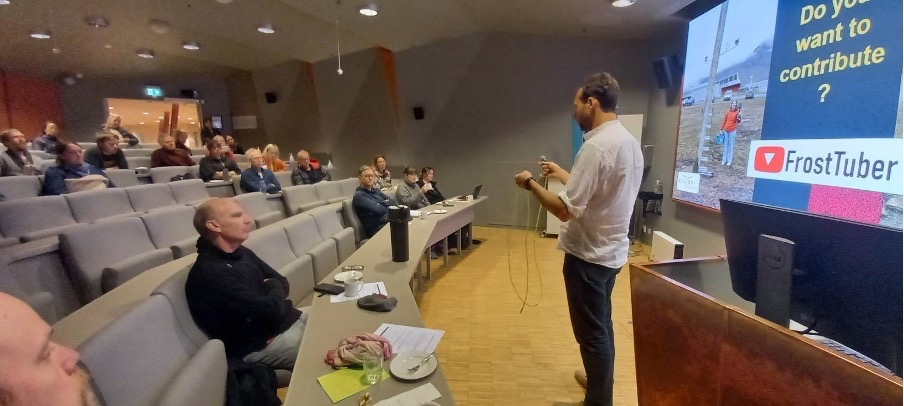
The seminar also connected experiences across Arctic regions and research projects. In a panel discussion, Knut Øien shared experiences from the ARCHAIC project, Alexandra Meyer provided an update on ILLUQ activities in Svalbard, and Thomas Ingeman-Nielsen (ILLUQ) offered insights into the challenges of permafrost thaw and adaptation in Greenland. Marjolaine Verret from UNIS addressed a particularly pressing local issue, Longyearbyen’s drinking water situation, and explained the connection between permafrost thaw and elevated manganese levels in the local water supply.

On Thursday the ThawingLYR and Illuq projects jointly hosted a late afternoon walking excursion for locals and visitors to learn more about permafrost in Longyearbyen. On this tour building challenges for cultural heritage were presented by Svalbard Museum, and Hanne Christiansen showed both 2003 and 2026 landslides, their landforms and their relation to permafrost.
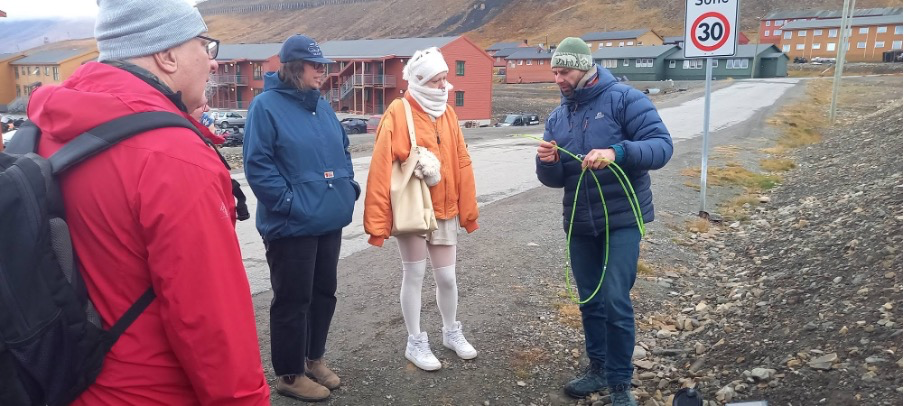
We visited research instrumentation such as boreholes and meteorological stations and explained their functionalities, and had a look directly into the dataportal to check the actual thaw depth. Ullrich Neumann, Kolibri GeoServices also launched the newly established frost tubes for citizen science. Now 6 frost tubes exist in Longyearbyen along the roads, and the participants were explained and shown how to do the measurements and provided comments on how to improve the measurements.
The seminar and excursion facilitated important exchange across research projects and disciplines, as well as between scientists and people who live and work in a changing permafrost environment, while connecting perspectives from across the Nordic Arctic.

