
At a glance
• Where: Herschel Island–Qikiqtaruk, Beaufort Sea, Canada
• When: 19 July–10 August 2026
• Question: Can arsenic, cadmium, mercury and lead stored in permafrost be mobilised and passed on through Arctic food webs?
• Result so far: 444 samples prepared for transport to Lisbon for analysis
A natural laboratory at the edge of the Beaufort Sea
After the 2025 campaign in Sisimiut, Greenland, the University of Lisbon team continued the ILLUQ journey farther west, to Herschel Island–Qikiqtaruk in the Canadian Western Arctic. The expedition team:
• Rute Cesário and Mário Dias – University of Lisbon, ILLUQ
• Michael Fritz – expedition leader, Alfred Wegener Institute (AWI)
• Jordan Byerley – Fisheries and Oceans Canada
• Peter Archie – from Aklavik; wildlife monitor and boat operator, sharing local ecological knowledge
The journey began with several days of preparation in Inuvik: organising food, re-sorting freight and fitting equipment into a Twin Otter aircraft.
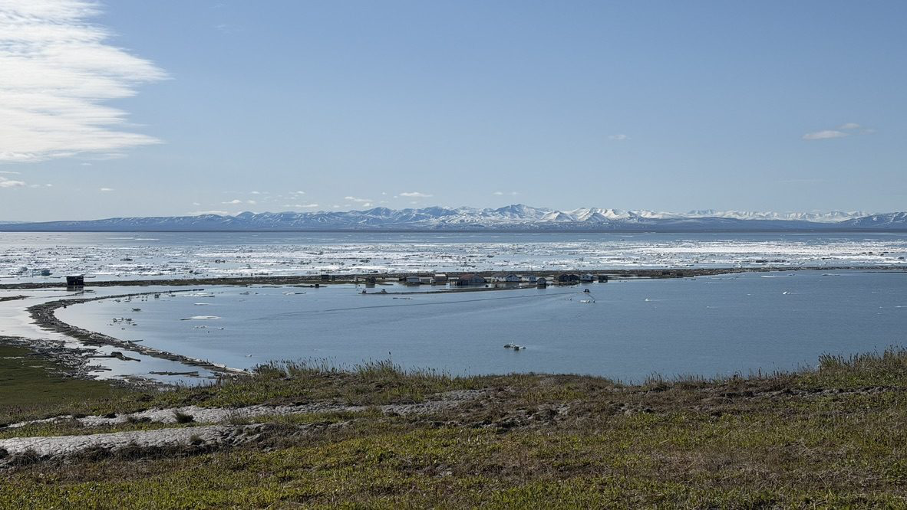
On 25 July, a narrow weather window allowed the team to fly over the Mackenzie Delta and land on Qikiqtaruk, where near-freezing temperatures, rough tundra and sea ice provided an stark reminder of the conditions ahead. The first field task was to identify suitable soil and plant communities for the experiments.
The campaign focused on a central ILLUQ question: as permafrost thaws, can arsenic (As), cadmium (Cd), mercury (Hg) and lead (Pb) previously stored in frozen ground be mobilised, transformed and transferred through Arctic ecosystems? Answering this question requires following and studying holistically the connections between soils, plants, coastal sediments, benthic organisms and fish.
Following contaminants through soil and plants
Experiment 1: from soil to roots and leaves
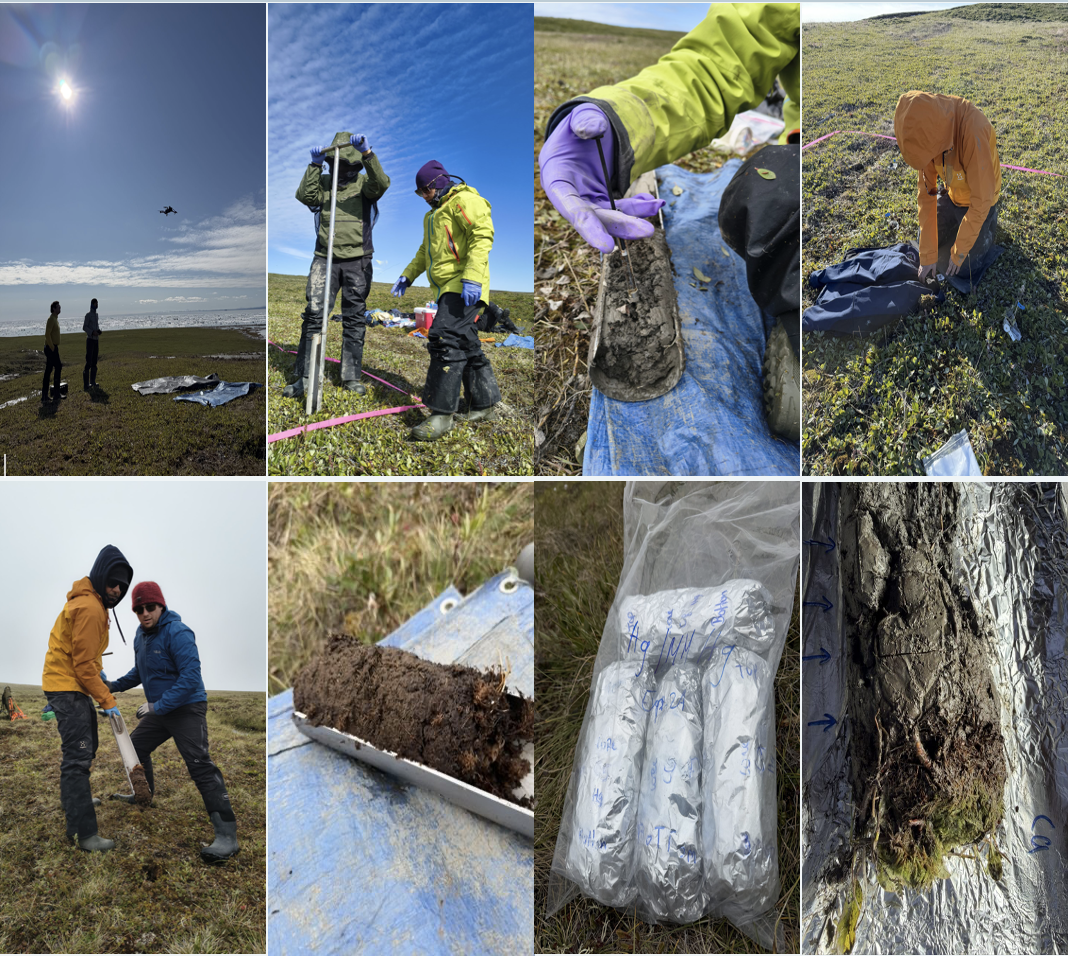
Rute and Mário collected shallow, intact sediment cores containing living Arctic willow (Salix arctica) and cloudberry plants (Rubus chamaemorus). Arctic willow is an important forage resource for animals such as muskoxen and caribou, while cloudberry produces fruit valued by both wildlife and people.
In controlled field incubations, selected contaminants were introduced into the soil to investigate their behaviour over time and their possible movement from soil into roots and above-ground plant tissues.
Experiment 2: how mercury and arsenic transform
A second set of experiments investigated the transformation of mercury (Hg) and arsenic (As) in soils collected at different depths. Using controlled incubations with different chemical forms of these contaminants, the team aimed to quantify methylation and demethylation rates. These processes are particularly important because they can alter contaminant mobility, bioavailability and toxicity in Arctic ecosystems.
Experiment 3: isotopic fingerprints of contaminants
The third experiment focused on the isotopic fractionation of mercury (Hg) and lead (Pb) during their interaction with soils and plants. Variations in isotope ratios can provide distinctive fingerprints of contaminant sources and reveal the biogeochemical processes affecting their transport and transformation. The experiment will also assess whether these isotopic signatures are modified or preserved during contaminant uptake by plants.
From the field to the field laboratory
Together, the experiments combined contaminant measurements with indicators of plant performance, allowing the team to examine both toxicokinetics (where contaminants go) and toxicodynamics (how plants respond to exposure).
Long days in the field were followed by careful processing in the field laboratory, often extending late into the evening. By the end of the campaign, 444 samples had been prepared for transport to Lisbon for chemical, microbiological, isotopic and biological analyses.
Connecting land, coast and food webs
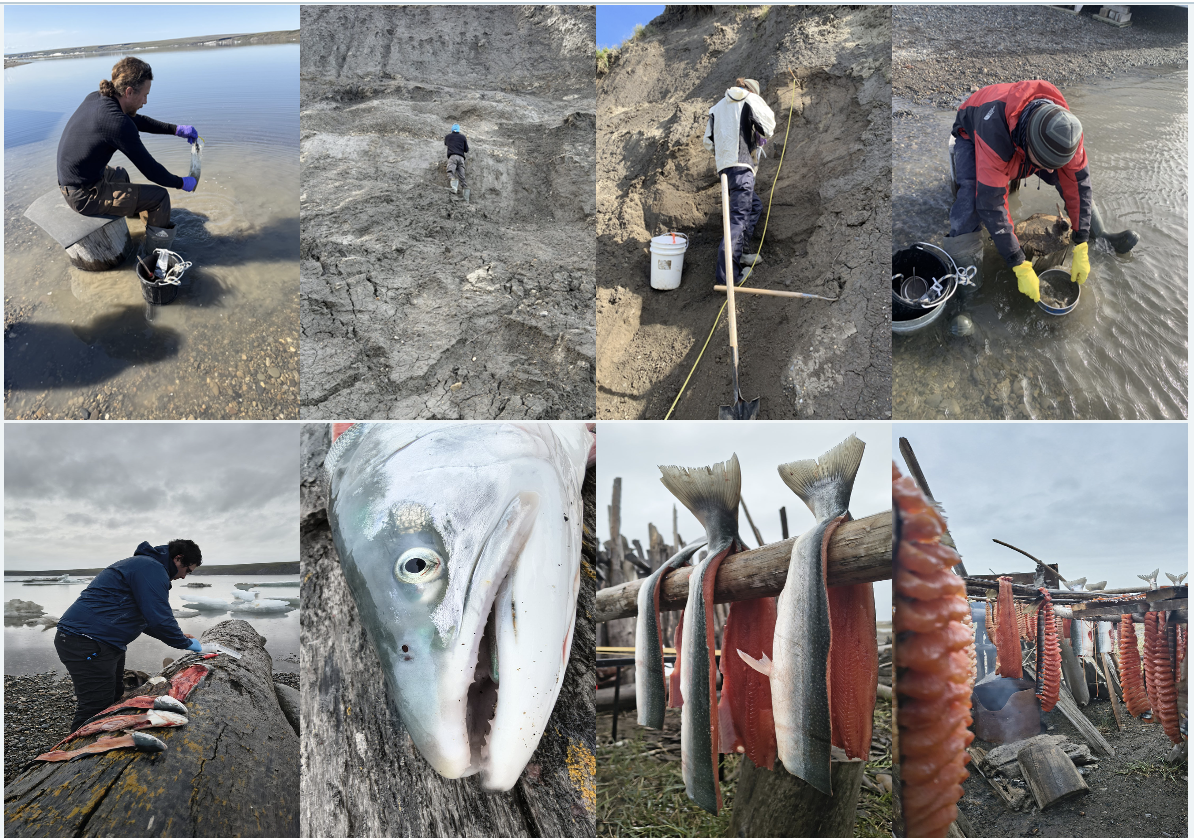
In parallel, Michael sampled marine sediments and benthic organisms along transects across Pauline Cove and at other coastal locations used by migrating fish. He also collected terrestrial permafrost sediments, including salt-rich deposits formed during the last ice age. These samples will help clarify how mercury and other material released from thawing permafrost move from land into the Beaufort Sea.
Jordan’s work extended the investigation into the aquatic food web. With support from Peter Archie and visiting Inuvialuit families from Aklavik, several fish species were sampled, including Dolly Varden (Salvelinus malma), an important food source in northern communities. Measurements and samples from different tissues will contribute to understanding how terrestrial-derived mercury may enter and circulate through Arctic food chains.
Science in a living Arctic landscape
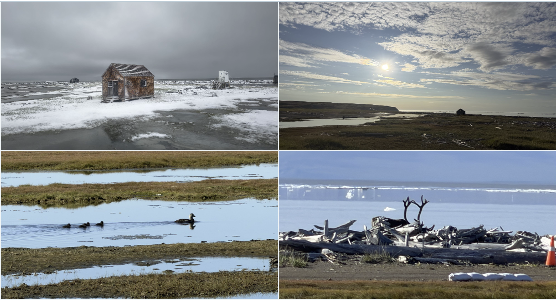
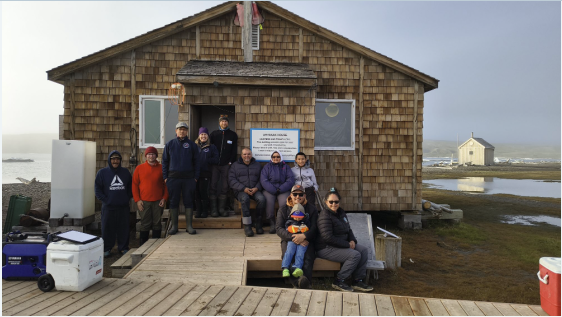
Fieldwork on Qikiqtaruk also meant adapting continuously. The team lived in a historic building with limited water and electricity, while temperatures ranged from around –5°C to 15°C, with sunshine, fog, strong winds, rain and snow, sometimes within the same week.
High tides, wind and low air pressure occasionally flooded parts of the camp. Equipment and hundreds of samples then had to be packed carefully, with some travelling as checked baggage and the remainder as freight.
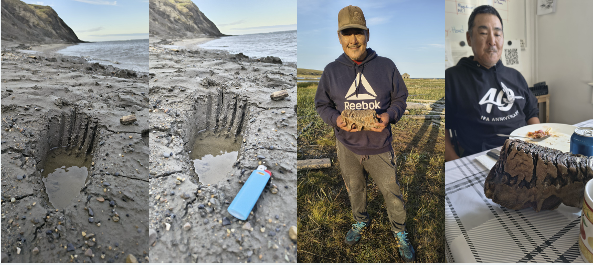
The island offered unforgettable encounters: a herd of 25 muskoxen, a caribou, belugas, grizzly-bear tracks and even a mammoth tooth found on the beach. Shared meals of fish and caribou, and time with Inuvialuit visitors, also reminded the team that Qikiqtaruk is not simply a remote research site. It is a living cultural landscape where traditional use, wildlife conservation, heritage protection and international science meet.
 |
 |
What comes next
The return from the field marks the beginning of the analytical phase. The samples collected across soils, plants, permafrost, coastal sediments, benthos and fish will now be examined to determine contaminant concentrations, chemical forms, pathways and biological responses. Until these analyses are complete, the campaign cannot demonstrate ecological effects, but it provides the integrated evidence needed to identify where risks may emerge as Arctic warming accelerates permafrost thaw.
Crucially, the results will help distinguish the mere presence of contaminants from their actual mobilisation, bioavailability and transfer through Arctic food webs, an essential step towards identifying vulnerable species and exposure pathways and improving environmental monitoring and risk assessment.
By linking terrestrial and marine environments, and by combining expertise from Portugal, Germany and Canada with local knowledge and logistical support, the 2026 campaign strengthens ILLUQ’s broader effort to understand how climate-driven change can alter contaminant exposure and affect the health of Arctic ecosystems and the communities that depend on them.

